Not Everyone Gets a Microphone: The Inequality Hidden Inside America's Spelling Bee Culture
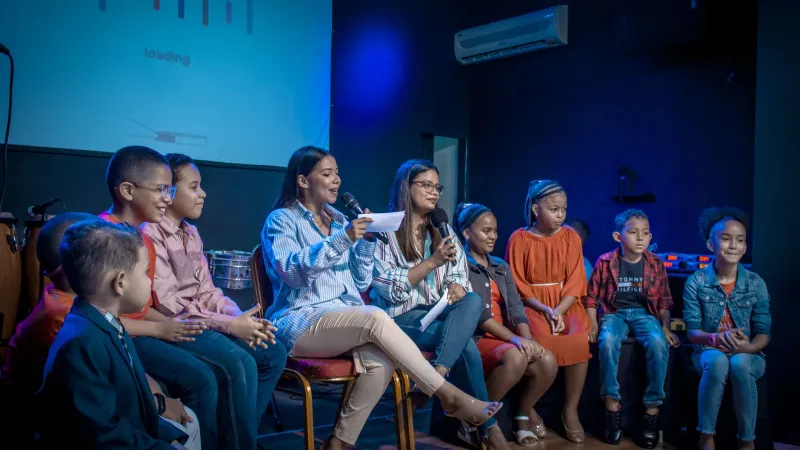
There's something almost mythological about the spelling bee stage. A lone kid steps up to the microphone, takes a breath, and spells out a word that most adults in the room have never heard. It feels like pure ability — no equipment, no team, no expensive gear. Just a brain and a dictionary.
But that image of pure meritocracy? It's only part of the story.
Behind the bright lights and buzzing audiences, a quieter and less comfortable truth is hiding in the data: spelling bee participation in the United States is not evenly distributed. Not by region. Not by income. And not by race. The students who make it to regional and national competitions skew heavily toward certain demographics, and the gap between who could compete and who actually does is wider than most people realize.
The Numbers Don't Lie
According to research on academic competition participation broadly, students from lower-income households are significantly less likely to enter scholastic competitions — including spelling bees — than their wealthier peers. A 2022 analysis of Scripps National Spelling Bee regional qualifiers found that urban schools in low-income districts were dramatically underrepresented compared to suburban and private school participants.
It's not that kids in underserved communities can't spell. It's that the pipeline to competition is full of holes.
Registration fees, even modest ones, can be a barrier for families stretched thin. Coaches and prep materials cost money that some schools simply don't have. And in districts where teachers are already managing overcrowded classrooms and underfunded programs, organizing a school-level spelling bee often falls to the bottom of a very long to-do list.
"We had the interest. We had kids who were genuinely excited," says one elementary school teacher from a Title I school in rural Mississippi who asked to be identified only by her first name, Dara. "But nobody had the time or the resources to make it happen consistently. It just kind of fizzled every year."
Geography Matters More Than You'd Think
The disparity isn't only about income — it's also geographic. Rural communities across the South, Midwest, and Appalachian regions face a distinct set of challenges. Transportation to regional competitions can be a significant obstacle when the nearest qualifying event is hours away. Schools in small towns may not have the administrative infrastructure to navigate competition registration processes that larger, better-staffed schools handle routinely.
Meanwhile, in major metro areas, the story shifts but doesn't necessarily improve. In cities like Chicago, Houston, and Philadelphia, schools in predominantly Black and Latino neighborhoods participate at lower rates than schools in wealthier enclaves of the same city — even when distance isn't a factor.
The result is a competition landscape that, despite its open-door policies, ends up looking a lot like the broader inequalities in American education.
The Programs Pushing Back
Here's where the story gets genuinely hopeful.
Across the country, a growing number of educators, nonprofits, and community organizations are building intentional pathways for students who've been left out of the spelling bee pipeline. And they're seeing results.
The Appalachian Literacy Initiative, a nonprofit operating across Kentucky and West Virginia, has partnered with rural school districts to run fully funded spelling bee programs — covering registration, prep materials, and even transportation to regional events. Since launching their spelling bee track in 2019, they've sent students to state-level competitions from counties that had never produced a regional qualifier before.
In Los Angeles, a community organization called WordUp LA runs after-school spelling bee prep clubs specifically in schools serving English Language Learners. Program director Elena Reyes says the impact goes beyond competition. "These kids are building confidence in English at the same time they're learning that they belong in academic spaces. That's huge."
At the national level, the Scripps National Spelling Bee itself has made moves toward greater inclusion, expanding its Bee Well mental wellness resources and launching outreach efforts targeting Title I schools. Critics argue the efforts don't go far enough, but advocates acknowledge the shift in awareness.
Digital platforms — including interactive spelling games and online vocabulary tools — have also started to chip away at the resource gap. When a student in rural Alabama can access the same high-quality word practice as a student at a private school in Connecticut, the playing field starts to level, even if it doesn't fully flatten.
What Schools Can Do Right Now
If you're an educator reading this, you don't need a grant or a nonprofit partner to start making a difference — though both help. Here are some practical moves that have worked in real classrooms:
- Designate a spelling bee champion on staff. Even one teacher who takes ownership of organizing the school bee makes an enormous difference in whether it actually happens.
- Use free and low-cost digital tools for prep. Platforms like ours offer interactive word practice that students can access from home or school without any cost barrier.
- Apply for fee waivers. Many regional and national competitions offer them — but schools have to ask. Make it someone's job to find and apply for those waivers every year.
- Celebrate participation loudly. In communities where academic competition isn't culturally normalized, visibility matters. Put the spelling bee on the same pedestal as the basketball team.
What Parents Can Do
For parents in underserved communities who want their kids to have access to spelling bee opportunities, advocacy is the first tool. Talk to your school principal. Ask whether the school participates in regional competitions. If it doesn't, ask why — and offer to help organize.
If your child's school genuinely doesn't have the capacity, local libraries, community centers, and faith organizations have all successfully hosted unofficial spelling bee programs that feed into broader competition pipelines.
And don't underestimate the power of at-home practice. Spelling bees reward consistent, curious learners. Flashcards at the kitchen table, word games on a road trip, vocabulary challenges during dinner — these things build the foundation, regardless of what resources the school provides.
Buzzing Toward a More Inclusive Stage
The spelling bee, at its core, is one of the most democratic academic competitions imaginable. You don't need to be tall, fast, or born into the right family. You need words — and the drive to learn them.
But access to that stage has never been as equal as the competition itself. The gap between potential and participation is real, documented, and — importantly — fixable. The programs already doing this work prove it.
Every kid who deserves a shot at the microphone should get one. Closing that gap isn't just good for the students who've been left out. It's good for the competition, good for the communities, and good for a country that claims to believe in the power of a fair shot.
The words are there. Let's make sure every kid gets the chance to spell them.