Who's Stepping Up to the Mic? The Real Story Behind Gender and Spelling Bees
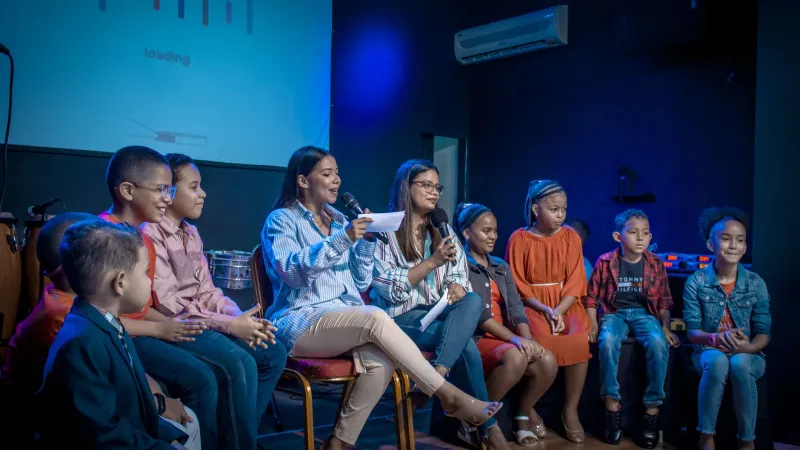
Picture the final round of a regional spelling bee. The room is tense, the audience is holding its breath, and the two remaining competitors are — more often than not — both girls. If you've watched enough of these competitions, that image probably feels familiar. But have you ever stopped to wonder why?
The gender dynamics playing out at spelling bees across the country are more complex than they first appear, and they say a lot about confidence, culture, and the way we raise kids to think about being smart in public.
The Numbers Don't Lie
Look at Scripps National Spelling Bee data from the past two decades and a pattern becomes pretty clear: girls have consistently outperformed boys at the highest levels of competition. A 2019 analysis of regional and national finalists found that girls made up a disproportionately large share of top finishers relative to their overall participation rates. That's not just a fluke — it's a trend.
But here's the twist. When you zoom out and look at who's signing up in the first place — at the classroom and school-level rounds — the numbers between boys and girls are a lot closer to even. The gap widens as competitions get more intense. Boys are dropping out somewhere between the classroom round and the regional stage, and researchers want to know why.
Confidence Is the Real Spelling Test
Dr. Priya Mehta, a developmental psychologist who studies academic achievement and gender, puts it bluntly: "The confidence gap is real, and it shows up early." Her research, focused on kids ages 8 to 14, found that girls in this age range are often more comfortable with public displays of verbal and linguistic skill, while boys are more likely to fear the social consequences of being seen as a "word nerd."
"There's a script a lot of boys absorb pretty young," she explains. "Being great at sports is cool. Being great at spelling? That takes a little more social courage."
That social pressure doesn't disappear on its own. It gets reinforced in cafeterias, on playgrounds, and sometimes even in classrooms where academic enthusiasm isn't always celebrated equally across genders.
What Coaches Are Seeing on the Ground
Marcus Tillman has coached spelling bee competitors at a middle school in suburban Ohio for eleven years. He's seen the drop-off firsthand. "I'll have a fifth-grade class where six boys are genuinely excited to compete," he says. "By seventh grade, I'm lucky if two of them are still showing up to practice."
He's tried a lot of things to keep boys engaged — framing spelling as a strategy game, connecting vocabulary to sports commentary and gaming culture, even leaning into the competitive angle more aggressively. Some of it works. "When boys see it as a competition — like, a real one with stakes — they respond differently than when it's framed as a language arts activity," Tillman says.
Coach Danielle Reyes, who runs a spelling bee prep program in Texas, takes a slightly different approach. She focuses on building what she calls "mic comfort" early. "A lot of kids, boys especially, are terrified of standing alone in front of a crowd and being judged on something they might get wrong. We practice that discomfort until it becomes familiar."
The Girl Factor: Why They're Thriving
So why are girls doing so well? Part of it comes down to study habits. Research consistently shows that girls in elementary and middle school tend to spend more time on deliberate practice — the kind of focused, repetitive preparation that spelling bee success demands. They're also, on average, more comfortable asking for help and seeking out resources.
But there's something else going on, too. Spelling bees have increasingly become spaces where academic achievement is celebrated loudly and publicly, and that cultural shift has benefited girls who've often been told that being "the smart one" is something to be proud of.
Former competitor Aisha Johnson, who made it to the Scripps national stage at age 13, remembers the experience as genuinely empowering. "I felt like I was being recognized for something I worked really hard at," she says. "There's nothing like standing at that microphone and knowing you've got this."
Breaking Down the Barriers
The goal isn't to celebrate one group's success at the expense of another — it's to figure out how to make the spelling bee stage feel accessible to every kid who loves words. Here's what coaches, educators, and researchers agree actually helps:
Reframe the competition. Boys who see spelling as a mental sport — something that requires strategy, stamina, and gamesmanship — are more likely to stay engaged. Lean into that framing early.
Celebrate the grind, not just the win. Spelling bee prep is genuinely hard work. Recognizing the effort publicly, not just the trophy, helps kids of all genders feel like the process is worth it.
Create visible role models. When boys see other boys — especially older, "cool" ones — competing seriously, it shifts the social calculus. Same goes for underrepresented groups across the board.
Address anxiety directly. Fear of public failure is real and it's not gendered, but it shows up differently. Coaches who build in low-stakes performance practice early report better retention across all demographics.
Every Voice Belongs at the Mic
At the end of the day, spelling bees are about more than words. They're about the courage it takes to stand up, take a risk, and trust yourself under pressure. That's a skill every kid — regardless of gender — deserves the chance to develop.
The confidence gap is real, but it's not permanent. With the right environment, the right framing, and adults who genuinely believe every kid belongs at that microphone, we can start closing it one word at a time.
Because the best spelling bee stage isn't the one where one group dominates. It's the one where every kid who loves language feels like they have a shot.