Powering Down Screens and Powering Up Words: The Family Spelling Bee Revolution
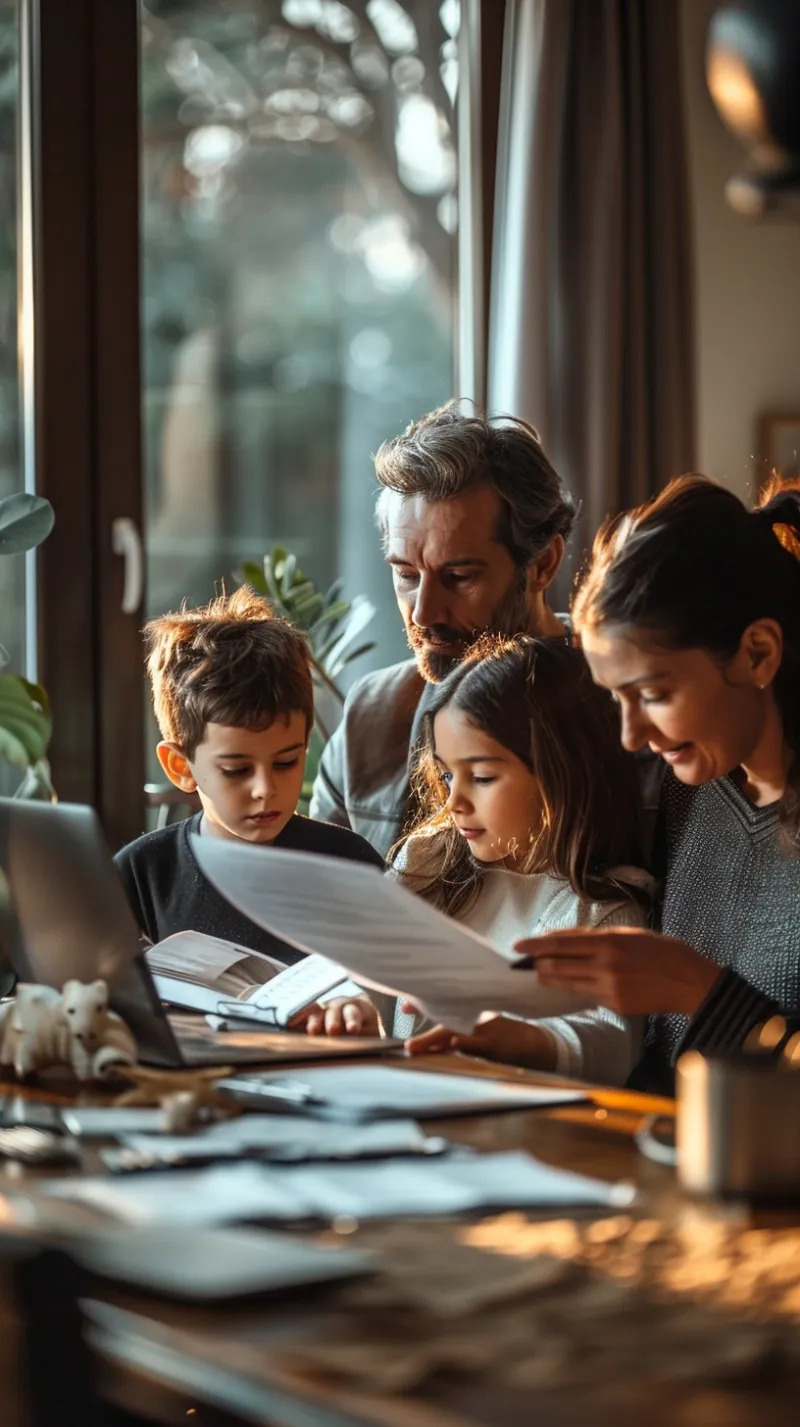
Photo: family studying together at kitchen table with word flashcards spelling bee preparation, via images.stockcake.com
Somewhere between the fourth consecutive hour of tablet time and the moment her daughter spelled "perseverance" correctly in front of 200 people at a regional competition, Lisa Tran of Columbus, Ohio, had a realization. "I didn't set out to find a hobby that would change our family," she admits. "I just wanted something — anything — that wasn't another app."
She's far from alone. Across the United States, a quiet but unmistakable shift is happening in living rooms, school gymnasiums, and community centers. Families are deliberately stepping away from passive digital entertainment and stepping toward something older, louder, and surprisingly thrilling: the spelling bee.
The Screen Time Problem No One Has Fully Solved
American kids are still spending an average of seven-plus hours a day in front of screens, according to recent data from Common Sense Media. Parents are well aware of the downsides — disrupted sleep, shortened attention spans, and a creeping sense that their kids are entertained but not genuinely engaged. The tricky part? Simply taking devices away doesn't work without replacing them with something equally compelling.
That's where word games and spelling competitions are quietly filling the gap. Unlike passive content consumption, spelling bees demand active mental effort. There's no autopilot mode. You either know the word or you don't — and that high-stakes, real-time challenge turns out to be exactly the kind of engagement kids are actually craving.
"Kids are bored by things that don't challenge them," says Dr. Monique Sellers, a literacy specialist based in Atlanta who has worked with elementary schools for over 15 years. "When a child stands at a microphone and asks for the origin of a word, they're doing something cognitively complex and deeply human. You can't replicate that with a passive screen experience."
Why Spelling Bees Stick When Flashcards Don't
Vocabulary instruction has long been one of education's trickiest challenges. Kids can memorize word lists on Monday and forget them entirely by Thursday. Competitive spelling changes that equation dramatically.
The secret is emotional encoding. When a word is connected to a memory — the nervous energy before a competition, the crowd's reaction, the moment a judge says "correct" — it gets stored differently in the brain. It becomes part of a story, not just a definition.
Parents who've watched their children prepare for spelling bees describe something that looks a lot less like studying and a lot more like obsession — in the best possible way. "My son Caleb would quiz himself at dinner, in the car, before bed," says Marcus Webb, a dad from suburban Minneapolis. "He wasn't doing it because I told him to. He was doing it because he genuinely wanted to win. The motivation was completely internal."
That intrinsic drive is something educators call a game-changer. When kids own their learning process, retention improves dramatically. Caleb, now 11, can still rattle off the etymology of words he studied for a competition two years ago.
The Confidence Factor Nobody Talks About Enough
There's a particular kind of courage required to walk up to a microphone in front of an audience and attempt a word you've never heard spoken aloud. It's uncomfortable. It's vulnerable. And it turns out, it's incredibly good for kids.
"Resilience isn't built in comfortable situations," Dr. Sellers points out. "It's built in moments where failure is possible and the child chooses to try anyway."
Spelling bees are uniquely designed to produce both outcomes — the thrill of success and the sting of elimination — and to teach kids that neither one is the end of the world. Children who compete regularly develop what researchers call "failure tolerance," the ability to absorb a setback without catastrophizing. In an era where anxiety among school-age children is at record highs, that skill is genuinely priceless.
Parents notice the shift even beyond competition days. Kids who've navigated the pressure of a spelling bee tend to raise their hands more in class, speak up more confidently in group settings, and approach new challenges with a "let me try" attitude rather than a "what if I'm wrong" paralysis.
It's Bringing Families Together in a Way That Screens Never Could
Here's the part that surprises parents most: spelling bees are turning out to be a remarkably powerful bonding tool.
Preparing for a competition means studying together. It means one parent reading words from a list while a kid paces the kitchen, nervous and focused. It means inside jokes about ridiculous words ("Chiaroscuro? Seriously?"), shared frustration over tricky etymology, and genuine shared victory when preparation pays off.
Lisa Tran describes the months leading up to her daughter Mia's first regional bee as some of the most connected time they'd had in years. "We were laughing, arguing, celebrating tiny wins. We were present with each other in a way that just doesn't happen when we're all on our own devices."
That presence is something family therapists consistently flag as essential — and increasingly rare. Shared goals, shared challenges, and shared outcomes create the kind of relational glue that family life often struggles to manufacture on its own.
Word Games at Home: Lowering the Entry Point
Not every family is ready to jump straight into competitive circuits, and they don't have to be. The same cognitive and relational benefits can start right at the kitchen table with informal word games — and platforms like Spelling Bee The Game make that entry point genuinely fun and accessible.
Interactive spelling games that adapt to a child's skill level help build the vocabulary foundation that eventually powers confident competition. Kids who play regularly develop familiarity with word roots, prefixes, and suffixes — the building blocks that make even unfamiliar words feel approachable rather than terrifying.
The key is consistency over intensity. Even 15 minutes of engaged word play a few times a week produces measurable vocabulary growth over a school year. And because it's interactive and game-based, kids don't resist it the way they resist traditional study methods.
Buzzing Into Something Bigger
The spelling bee revival isn't just a nostalgia trip or a parenting trend. It reflects something genuine: a hunger for activities that are challenging, meaningful, and — crucially — done together.
In a culture that often defaults to the path of least resistance (hand over the tablet, end the argument), choosing to invest in word games and spelling competitions is a small but significant act of intentionality. It says that boredom is survivable, that hard things are worth doing, and that your kid's mind is worth the effort of a real challenge.
Mia Tran placed third in her regional competition last spring. She's already studying for next year. Her mom says she barely has to remind her.
"She just loves words now," Lisa says, still sounding a little amazed. "I don't know exactly when that happened. But I'm so glad we turned off the TV long enough to find out."